THE CHALLENGES OF ICT SERVICES IN OAU
Written by Bello Quam Olabode
Edited by Oluwatobi Oluwabusuyi
May 2, 2026 | 4 MINS READ
Information and Communication Technology (ICT) is no longer a supporting feature of university education. It is now the operational backbone. Every stage of a student’s academic journey, from course registration to result access and examination clearance, depends on digital systems. When these systems function efficiently, they create order and accessibility. When they fail, they disrupt the academic process in fundamental ways.
At a university where digital systems are meant to simplify academic life, many students at Obafemi Awolowo University (OAU) find themselves facing a different reality, one defined not by efficiency, but by exhaustion.
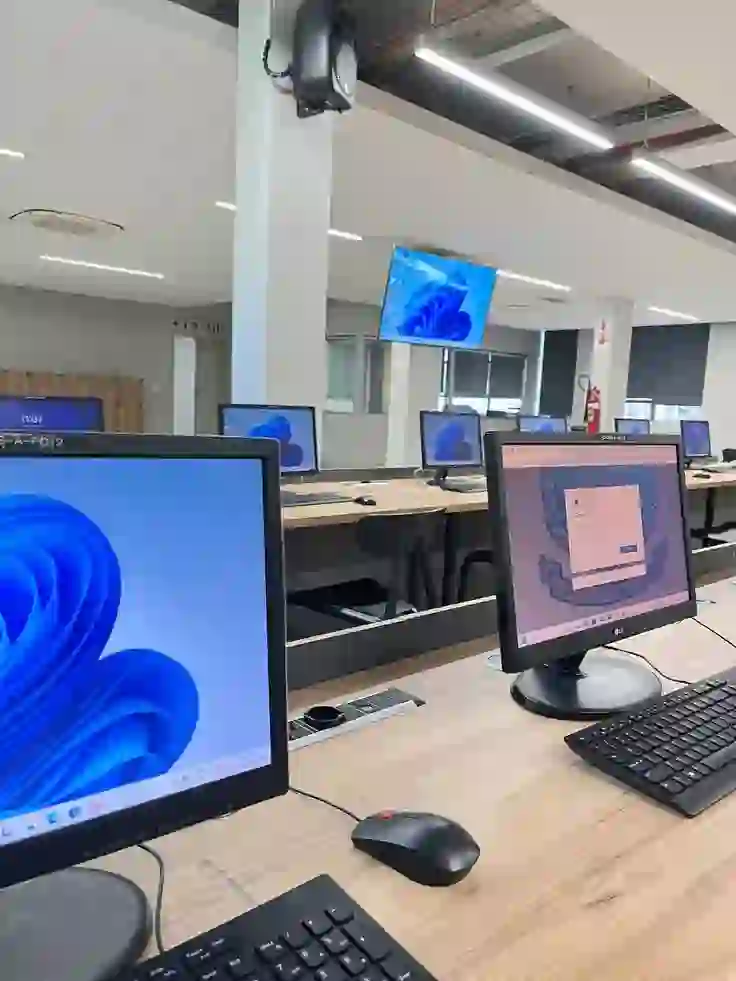
What should take minutes, such as course registration, fee confirmation, or sitting for a computer based test, often turns into hours of waiting under the sun. Long queues stretch outside ICT centres, testing students’ patience and turning routine academic tasks into physically and mentally draining experiences.
This frustration is not isolated. It is systemic.
Survey data collected from students reveals a troubling pattern. Nearly half of the respondents rated the accessibility of ICT services as poor, while a similar number described it as merely good, a response that reflects reluctant acceptance rather than genuine satisfaction. Only a few students expressed confidence in the system.
One of the students who took the survey recounted standing for hours just to access basic services, describing the experience as deeply stressful and overwhelming. The strain is not merely physical. It also comes with uncertainty. With no clear system of time management or scheduling, students are left anxious and unsure if they will meet important academic deadlines.
Even more telling is how students interact with ICT services. More than half of the respondents identified examination and test platforms as their primary use of ICT facilities. This means that the system most important to academic progression is also the most strained.
The consequences are predictable and severe.
During peak periods such as examinations and tests, the ICT infrastructure appears unable to handle the demand. Students report frequent system crashes, lagging portals, and unresponsive interfaces. In some cases, these failures come dangerously close to costing students their exams.
“I almost missed an important test because the system would not respond,” one respondent shared.
Moments like this highlight a fundamental issue. There is a lack of reliability in a system where reliability is essential. Beyond statistics and system failures lies a deeper issue, the human impact.
Students describe enduring harsh weather conditions while waiting in overcrowded spaces, often with little or no coordination from authorities. The absence of proper scheduling forces hundreds of students into the same time slots, creating unnecessary congestion.
The result is an environment that is not only inefficient but also inhumane. Fatigue, stress, and frustration become part of the academic experience, overshadowing the very purpose of these systems, which is to support learning.
It would be easy to frame this as purely a technological issue involving servers, bandwidth, or outdated infrastructure, but the problem goes deeper.
What students are experiencing is a failure of planning, capacity management, and user centred design. The queues, crashes, and confusion are not inevitable. They are symptoms of a system that has not evolved to meet the demands placed upon it.
If ICT services are to fulfill their role in a modern university, change is not optional. It is urgent.
Improved server capacity, better scheduling systems, and decentralized access points could significantly reduce pressure on existing infrastructure. More importantly, there must be a shift toward prioritizing the student experience and ensuring that access to essential academic services is seamless, reliable, and humane.
At its core, ICT in education is meant to remove barriers, not create them.
But at OAU, it has become a gatekeeper that students must struggle against just to move forward.
Until these issues are addressed, the promise of digital efficiency will remain unfulfilled, and students will continue to pay the price, not in money, but in time, energy, and peace of mind.
